background

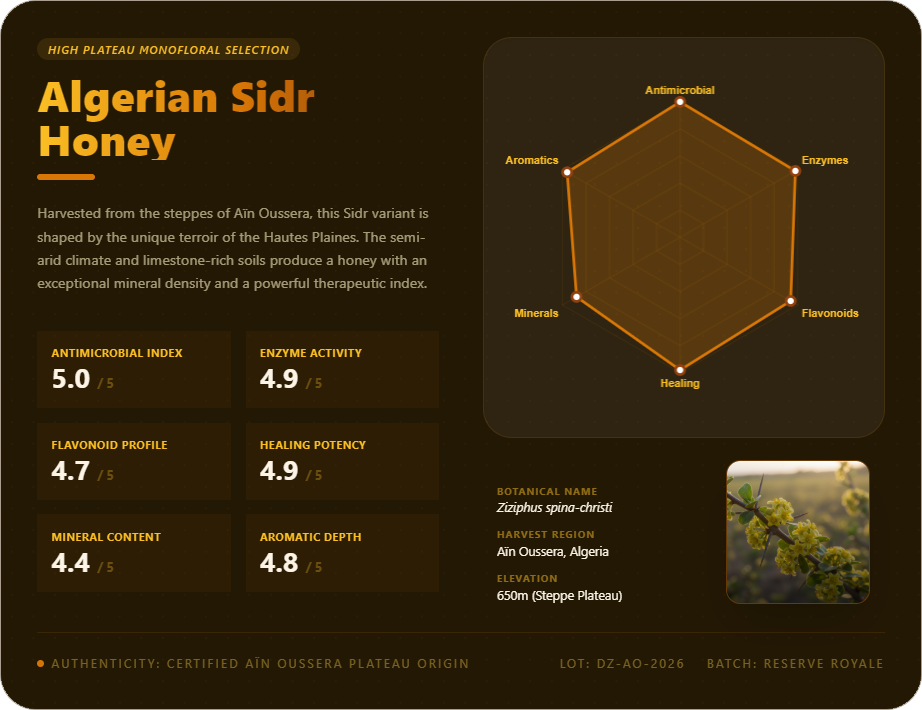
ziziphus lotus "Sidr" Honey

Monofloral Origin and RaritySidr honey is extracted exclusively from the nectar of the Sidr tree, which thrives in arid regions. Its seasonal blooming and traditional harvesting methods contribute to its scarcity and high market value. Known as "The Liquid Gold of the Arabs," Sidr honey is considered one of the most expensive and finest types of honey in the world, prized for its superior therapeutic benefits and high nutritional value. Below are the most prominent features of this honey, particularly in regions like Algeria (Which has Sidr in Mitidja and the Sahara) and Yemen (from Wadi Doan Valley): 1. Source and Origin Sidr Honey: Extracted from the nectar of the Sidr tree flowers, scientifically known as Ziziphus spina-christi. The Season: It is a "monofloral" honey, as the trees bloom during specific periods (usually at the beginning of summer). This results in a short and challenging production window. 2. Physical Characteristics : Color: Distinguished by a light golden color that tends to darken (Amber) over time. Texture: Highly viscous and thick. Taste: A rich, potent flavor. It is remarkably resistant to crystallization, meaning it does not freeze or turn into sugar even in cold weather or when refrigerated. 3. Cultural and Historical Significance : Beyond its health benefits, the Sidr tree and its honey hold a prestigious status in Islamic heritage. It has been used in traditional medicine and cuisine for centuries throughout the Arabian Peninsula.
4. Health Benefits (The Healing Power) : In folk medicine, Sidr honey is used as a natural alternative to antibiotics: • Immune System Support: Rich in antioxidants that protect cells against fungi, bacteria, and viruses. • Digestive Health: Effective in treating stomach ulcers, colon issues, gastritis, indigestion, and constipation. • Skin improvement and wound healing : Used topically to disinfect wounds and burns, accelerating healing. Its potent antibacterial properties can sometimes be more effective than certain standard antibiotics. • Improving Sleep Quality: Consuming a small amount before bed can help improve sleep and reduce stress and anxiety. • Heart Health: Helps regulate cholesterol levels and reduce harmful fats, promoting cardiovascular health. • General Tonic: Provides the body with a quick energy boost and is used to treat general weakness. • Antimicrobial, Anti-inflammatory, and Antioxidant Properties : Based on the points mentioned, Sidr honey is classified as an integrated "Natural Pharmacy" thanks to this powerful trio: Antimicrobial: It acts as a natural shield against bacteria and fungi, inhibiting their growth and aiding in the disinfection of wounds and infections. Anti-inflammatory: It works effectively to reduce swelling and soothe irritated tissues, whether used topically on the skin or internally for the digestive and respiratory systems. Antioxidant: It is rich in phenolic compounds and flavonoids that fight "free radicals," protecting body cells from damage, slowing the signs of aging, and boosting overall immunity. Order SIDR HONEY Now !

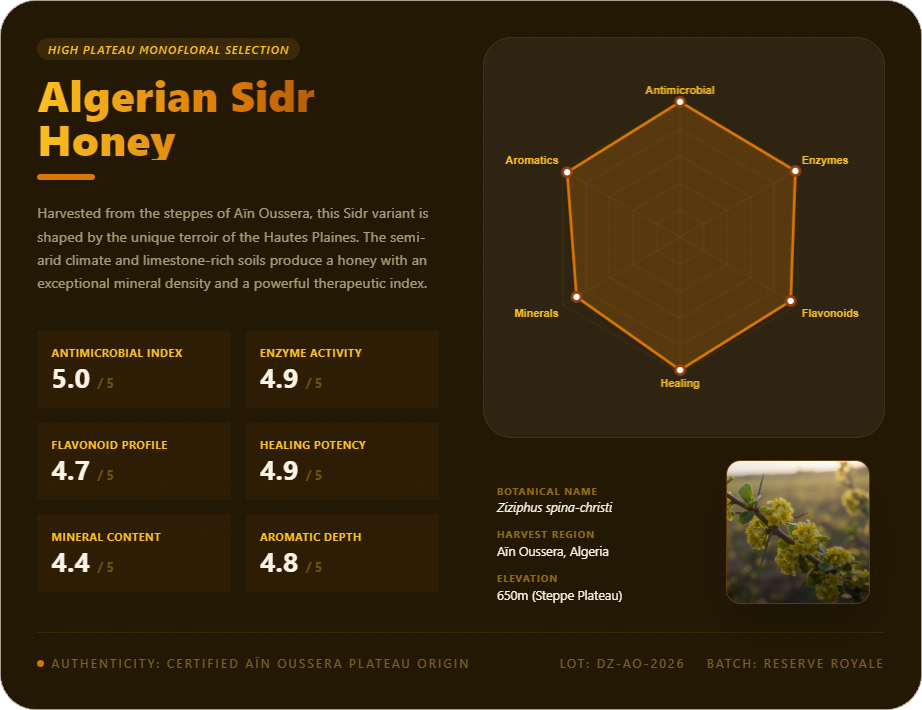
5. Sidr Honey in the Algerian Sahara : • Desert Sidr: Algeria possesses Sidr from desert and mountainous regions (such as Laghouat, M'Sila, Ain Oussera, and many others). This honey is of international quality and rivals Yemeni honey in its properties. ________________________________________ ? Advice When Purchasing : Due to its high price, Sidr honey is often subject to adulteration (such as "fed honey"). To ensure authenticity, check the following: • Aroma: Original Sidr honey has a pungent, distinct scent reminiscent of the Sidr tree itself. • The Test: It does not dissolve quickly in cold water; instead, it falls to the bottom as a continuous, solid thread. • Crystallization: It should not crystallize or turn into sugar, even in cold environments. Medical Disclaimer : This information is for educational purposes only and should not be considered a substitute for professional medical advice, diagnosis, or treatment. Always consult a qualified healthcare professional before starting any new treatment or making dietary changes.

Excerpts from the Algerian SIDR of Sahara

Thistle Honey

Thistle honey is a rare, monofloral honey that thrives in specific arid and sunny environments. most effectively supports the liver and digestive systems, as well as the cardiovascular, immune, and integumentary (skin) systems. Here is a brief overview : I. source and origin: 1.. Botanical Source It is produced by bees foraging on various plants in the Asteraceae (Daisy) family. The most common species include: Milk Thistle (Silybum marianum): Primarily used for medicinal honey. Star Thistle (Centaurea): Known for a lighter, milder honey profile. Mediterranean Thistle (Galactites tomentosa): The source of the classic, floral honey of the Mediterranean islands. 2.. Geographical Origin Thistle honey is primarily a product of the Mediterranean Basin, though it is produced in other dry climates worldwide: Italy: The most famous regions are the islands of Sardinia and Sicily, where it is a cultural staple. North Africa: Highly valued in Morocco (Berber regions) and Algeria. Europe: Produced in Spain (Castilla y León), France (Corsica), and parts of Romania and Poland. North America: "Star Thistle" honey is a significant variety in the United States (especially Michigan and California). 3.. Nature of Production Wild & Rare: It is usually harvested from wild, uncultivated lands since thistles are often considered weeds in commercial agriculture. Seasonality: Harvesting typically occurs in late spring and summer (May to July) when the vibrant purple and yellow flowers are in full bloom. II. Cultural and Historical Significance : Thistle honey carries a weight of history and symbolism that spans from ancient Mediterranean medicine to the national pride of the Scottish Highlands. Its significance is often tied to the paradox of the plant itself: a prickly, defensive weed that produces a nectar of exceptional sweetness and healing power. III. Physical Characteristics : Flavor: Strong, sweet, floral, with notes of cinnamon and nutmeg, though not bitter. Appearance:Light amber to amber, becoming lighter when crystallized. Visual & Sensory Profile Color: Starts as a warm, golden amber when liquid; once crystallized, it transforms into a pale beige or creamy ivory color. Texture: It is a fast-crystallizing honey. It typically forms very fine, smooth crystals, resulting in a creamy, spreadable consistency rather than a gritty one. Aroma: Features a medium-intensity floral scent, often compared to chrysanthemums, wild herbs, or dried hay. Flavor: A complex balance of delicate sweetness with a distinctive, slightly bitter or astringent finish that lingers pleasantly on the palate.

IV. thistle honey benefits: Beyond its unique flavor profile, thistle honey is highly valued for its medicinal properties. Its primary health benefits and the key biological functions it supports include: 1.. Liver and Digestive Health Thistle honey is most renowned for its hepatoprotective (liver-protecting) properties. • Liver Detoxification: It is traditionally used to stimulate liver activity and aid in the elimination of toxins. It contains trace elements of silymarin, an antioxidant compound that supports liver cell regeneration. • Bile Production: It acts as a natural cholagogue, which promotes the production and flow of bile to help the body break down fats and reduce the feeling of "heaviness" after eating. • Gut Health: The honey possesses prebiotic qualities that promote beneficial gut bacteria, easing stomach discomfort and aiding overall digestion. It is also used as a remedy for stomach ulcers and intestinal infections. Order Thistle Honey Now !

1 2